
Explore our collections
🌸 Orchids
Unique orchids curated in Ecuador —from cloud forests to coastal foothills.
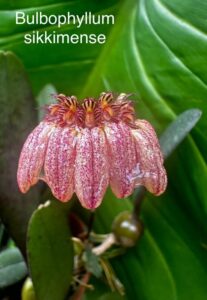
Bulbophyllum
Unique Bulbophyllum species, exotic orchids for discerning collectors.
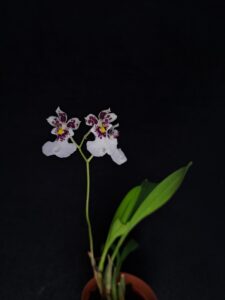
Caucaea
Caucaea is an Andean Oncidiinae genus of epiphytes from montane and cloud forests, often above 2,500 m. They feature compressed pseudobulbs, narrow leaves, and racemose inflorescences bearing multiple flowers. Fun fact: the genus shows its greatest diversity in Ecuador, and several species were split from the broad, traditional concept of Oncidium based on morphological and molecular evidence.
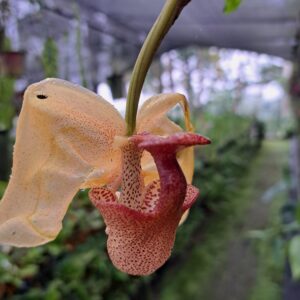
Coryanthes
Coryanthes are Neotropical epiphytes from low to mid elevations (~0–1500 m) in warm, very humid habitats. Fun fact: their flowers form a liquid-filled “bucket” that traps male euglossine bees; escaping forces contact with the pollinarium, ensuring pollination.
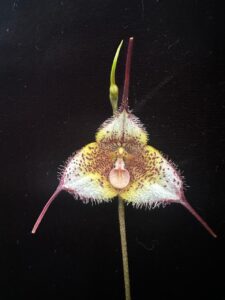
Dracula
Mysterious orchids from Ecuador’s cloud forests. Known as “Monkey Orchids” for their unique faces, they thrive in cool, humid environments. A true treasure for collectors.
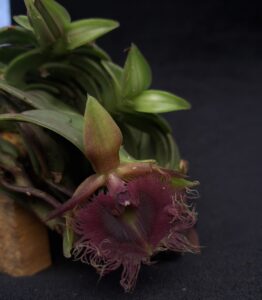
Epidendrum
Epidendrum is one of the largest orchid genera, with over 1,500 species across tropical America. They thrive from sea level up to high Andean peaks. Interestingly, the name comes from Greek for “upon the trees,” reflecting their mostly epiphytic habit.
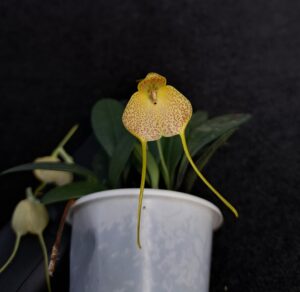
Masdevallia
Masdevallia citrinella is a charming miniature orchid from the cloud forests of Ecuador. Its vivid lemon-yellow flowers are not only eye-catching but also quite rare among the genus, where orange and red tones are more common. This species grows naturally at altitudes of 1,500–2,200 meters, in cool and misty environments, making it a perfect candidate for terrarium culture or collections of mountain orchids. Despite its delicate look, it is surprisingly hardy when provided with constant humidity and gentle shade.
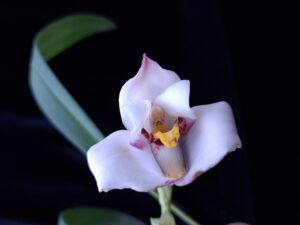
Maxillaria
Maxillaria is a diverse genus of orchids with over 600 recognized species, distributed from Mexico to South America. They are highly varied, ranging from miniature epiphytes to robust plants with showy blooms. One of their most famous representatives is Maxillaria tenuifolia, known as the “coconut orchid” because of its unmistakable scent of fresh coconut. Many species are native to the Andes and thrive in cool to intermediate climates, making them an exciting genus for both beginners and experienced growers.
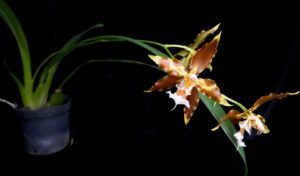
Oncidium
Oncidium, the “dancing lady orchid,” is famous for its abundant sprays of long-lasting flowers that resemble tiny dancers in yellow skirts.
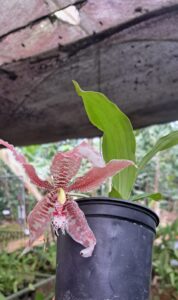
Paphinia
Paphinia is a Neotropical orchid genus (≈16 species) ranging from Costa Rica to northern South America. It is noted for pendant inflorescences and large, star-shaped, short-lived flowers, best grown in hanging baskets. Fun fact: one atypical species, Paphinia dunstervillei, is terrestrial with an upright inflorescence.
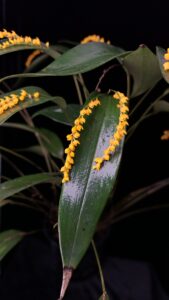
Pleurothallis
One of the most diverse orchid genera in the world, with more than 1,200 recognized species, mostly found in the cloud forests of the Andes. Known for their intricate miniatures and unique leaf shapes, these orchids are a true collector’s treasure. Ecuador, especially the province of El Oro, is a natural hotspot where many Pleurothallis species thrive.
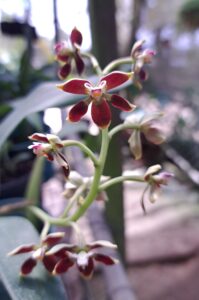
Prosthechea
Prosthechea is a Neotropical Laeliinae genus of epiphytes with distinctly grooved pseudobulbs and 1–3 leathery leaves, occurring from southern Florida and the West Indies through Mexico, Central and South America. Fun fact: Prosthechea cochleata (“black orchid”) is Belize’s national flower.
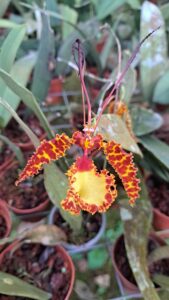
Psychopsis
Psychopsis comprises a few Neotropical “butterfly orchids” that rebloom sequentially on the same spike. They enjoy intermediate–warm conditions and bright, filtered light. Fun fact: Don’t cut the spike — it can flower for years from the same inflorescence.
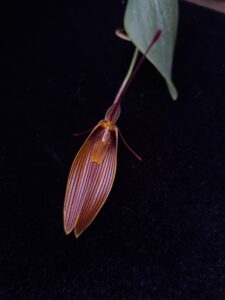
Restrepia
Restrepia is an Andean Pleurothallidinae genus of small epiphytic orchids, bearing a single leaf per ramicaul. Flowers are solitary and successive from the leaf base, with lateral sepals fused into a synsepal, a long dorsal sepal (often clubbed at the tip) and thread-like petals. They are chiefly found in cloud-forest habitats at mid to high elevations.
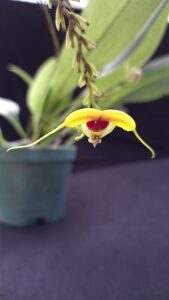
Scaphosepalum
Scaphosepalum (Pleurothallidinae) are cloud-forest orchids from Central & South America (with one species reaching southern Mexico). They are typically grown cool–intermediate. The name refers to boat-shaped sepals; the fused lateral sepals create a bowl/sac.
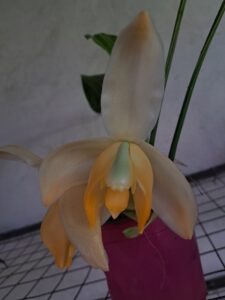
Stanhopea
Stanhopea is a Neotropical genus of epiphytic orchids noted for pendant inflorescences that push through baskets and for intensely fragrant but short-lived blooms (often ≤3 days); males of euglossine bees visit the flowers to collect fragrances and effect pollination.
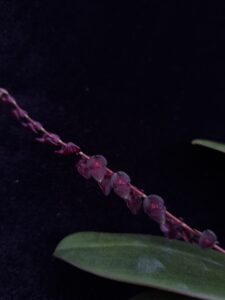
Stelis
Stelis is a Neotropical Pleurothallidinae genus with about 500 species, mostly epiphytes, ranging from southern Florida and Mexico to Tropical America. It is characterized by dense racemes of very small (often translucent) flowers. Fun fact: in many species the flowers open in sunlight and close at night.
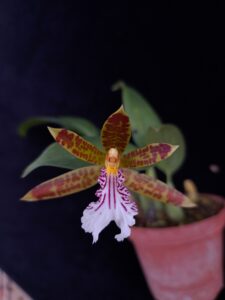
Trichopilia
Trichopilia is an epiphytic orchid genus within Oncidiinae, ranging from Mexico and the Caribbean to South America (e.g., Costa Rica, Colombia, Ecuador, Bolivia, Brazil). Depending on treatment, about 35–45 species are recognized. Plants are noted for large, fragrant flowers on short inflorescences. Fun fact: the name Trichopilia derives from Greek trichos (“hair”) and pilos (“felt”), referring to the fringed margin of the clinandrium in the type species.
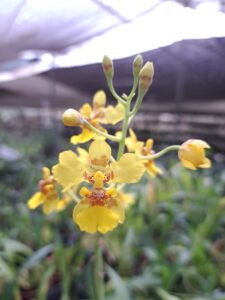
Vitekorchis
Vitekorchis is an Andean South American genus (Bolivia, Colombia, Ecuador, Peru, Venezuela) valued for branched inflorescences and striking flowers, typically in cool–intermediate, high-elevation montane forests. Fun fact: several species bear floral elaiophores (oil glands) that reward oil-collecting bees—a remarkable and rare pollination strategy.
Did you know?
Ecuador is a global orchid hotspot.
Miniatures cluster in cloud forests.
Genus filters speed discovery.
Subcategories reveal microhabitats.
🌿 Tropical Plants
Ecuadorian tropicals with lush foliage from Andean and coastal ecosystems.
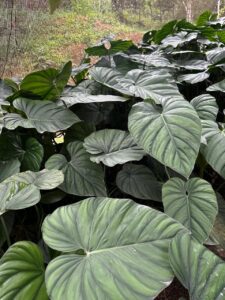
Araceae
The Araceae family includes over 3,700 species and about 140 genera, among them Monstera, Anthurium, and Philodendron. They are characterized by a spadix inflorescence, usually accompanied by a spathe. The greatest diversity is found in the tropics of the Americas and Asia, spanning epiphytes, climbers, and terrestrials. Fun fact: some aroids, like Philodendron bipinnatifidum or Amorphophallus titanum, can raise their internal temperature up to 10 °C above ambient to attract pollinators (thermogenesis).
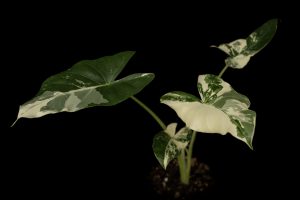
Alocasia
Alocasias, commonly known as "Elephant Ears," are the ultimate example of symmetry in the Aroid world. This genus stands out for its tuberous rhizomes and peltate leaves, featuring textures ranging from deep velvet to leathery and metallic finishes. They are dynamically growing plants that respond precisely to their environmental conditions.Care Essentials:Light: Bright indirect light. Intensity is key to maintaining petiole rigidity and preventing the plant from leaning.Water: They prefer a consistently moist but well-draining substrate. They are sensitive to prolonged drought, which can induce a state of dormancy.Nutrition: As fast growers, they require regular fertilizing during the active season to support their large leaf mass.Fun Fact: In the humid forests of South America, Alocasias have perfected the lotus effect: their leaves possess a nanostructure that repels water, allowing rain to wash away dust and pathogens as it rolls toward the roots. Additionally, some species exhibit "guttation," a process where they expel excess water through the leaf tips to regulate internal pressure.
Anthurium
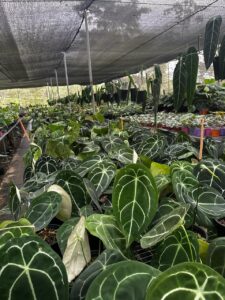
Anthuriums represent the peak of Aroid evolution. While some dazzle with vibrant, waxy spathes, collector varieties are famous for their "velvety" leaves and silver venation that looks hand-etched. This genus defines the character of any high-end greenhouse.Care Essentials:Light: High-intensity filtered light. Avoid direct sun to protect the micro-hairs that create the velvet effect.Substrate: A highly porous mix is essential (bark, perlite, and charcoal). Their roots need to "breathe."Humidity: Critical for new leaf development. Constant levels above 70% ensure smooth, undeformed growth.Fun Fact: Many Anthuriums are epiphytes, meaning they grow on trees in the wild rather than in the soil. Additionally, Ecuador is a major speciation hub: specimens with leaves exceeding two meters in length, such as the massive Anthurium regale, have been discovered here.
Monstera
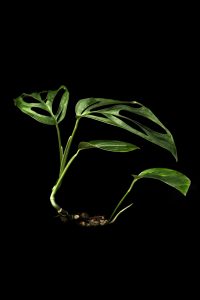
The Monstera genus is a masterpiece of adaptation. Its characteristic "windows" or leaf perforations are not merely aesthetic; they are an evolutionary strategy to capture light in the lower forest layers without the wind tearing their large blades. They are hemiepiphytic plants: they begin their life on the forest floor and climb toward the canopy in search of brightness.Care Essentials:Light: They require medium to high-intensity indirect light. Poor lighting will stop the production of fenestrations in new leaves.Substrate: A coarse, highly draining mix. Using coco chips, bark, and perlite is ideal to prevent root suffocation.Support: As natural climbers, using a pole allows the plant to develop larger, more mature leaves.Fun Fact: In the Neotropics, including the humid regions of Ecuador, these plants exhibit a phenomenon called skototropism: as juveniles, they grow toward darkness (the shadows of tree trunks) to find a support to climb, reversing the typical behavior of seeking light.
Philodendron
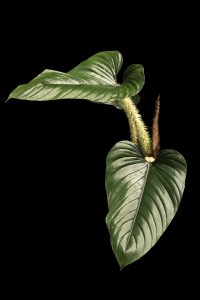
Philodendron is one of the largest genera in Araceae, with over 480 described species, native from Mexico to South America and the Caribbean. Many are climbing or hemiepiphytic, thriving in humid tropical forests. The name comes from Greek philo (love) and dendron (tree), meaning “tree lover.” Fun fact: several Philodendron species are pollinated by beetles of the genus Cyclocephala; at night the spadix heats up and releases specific fragrances to attract them, synchronizing flowering with insect behavior.
Fun facts
Dry & humid forests meet near El Oro.
Tags like “climbing”, “velvety”.
Compare textures by subcategory.
Refine by price and size quickly.
We ship worldwide
Explore our current destinations and those coming soon.
Destinations
Quick answers
-
How do pre-orders work?
Pick your plants, reserve, and we confirm ship-out date based on your route.
-
How long does shipping take?
Varies by country and carrier. We estimate at checkout and confirm after your pre-order.
-
Is there a minimum order?
No minimum; bundling lowers shipping per plant.
-
Which payments do you accept?
Bank transfer, cards and PayPal (depending on country).
-
Is a phytosanitary certificate included?
Yes, Ecuador’s official phytosanitary is included.
-
Do I need an import permit?
Some countries require it. If applicable, we guide you.
-
How is shipping cost calculated?
By weight/volume, destination and mode (home/fair pickup).
-
Can I consolidate with friends?
Yes, we can group orders to optimize cost.
-
Cold-weather shipping?
We reinforce packing and add insulation when needed.
-
How to care after arrival?
Acclimate 24–48h, bright indirect light, moderate watering.
-
What is your DOA policy?
Report within 24h with photos/unboxing; replacement or credit after review.
-
Fair pickup?
Yes. Choose “Fair pickup (5B)” and select your event.
-
Tracking?
We share tracking once it’s with the carrier.
-
Are customs/taxes included?
Local import taxes are not included.
No results for that term.
Media & Press
Latest posts and a recent highlight — at a glance.
Latest Instagram post


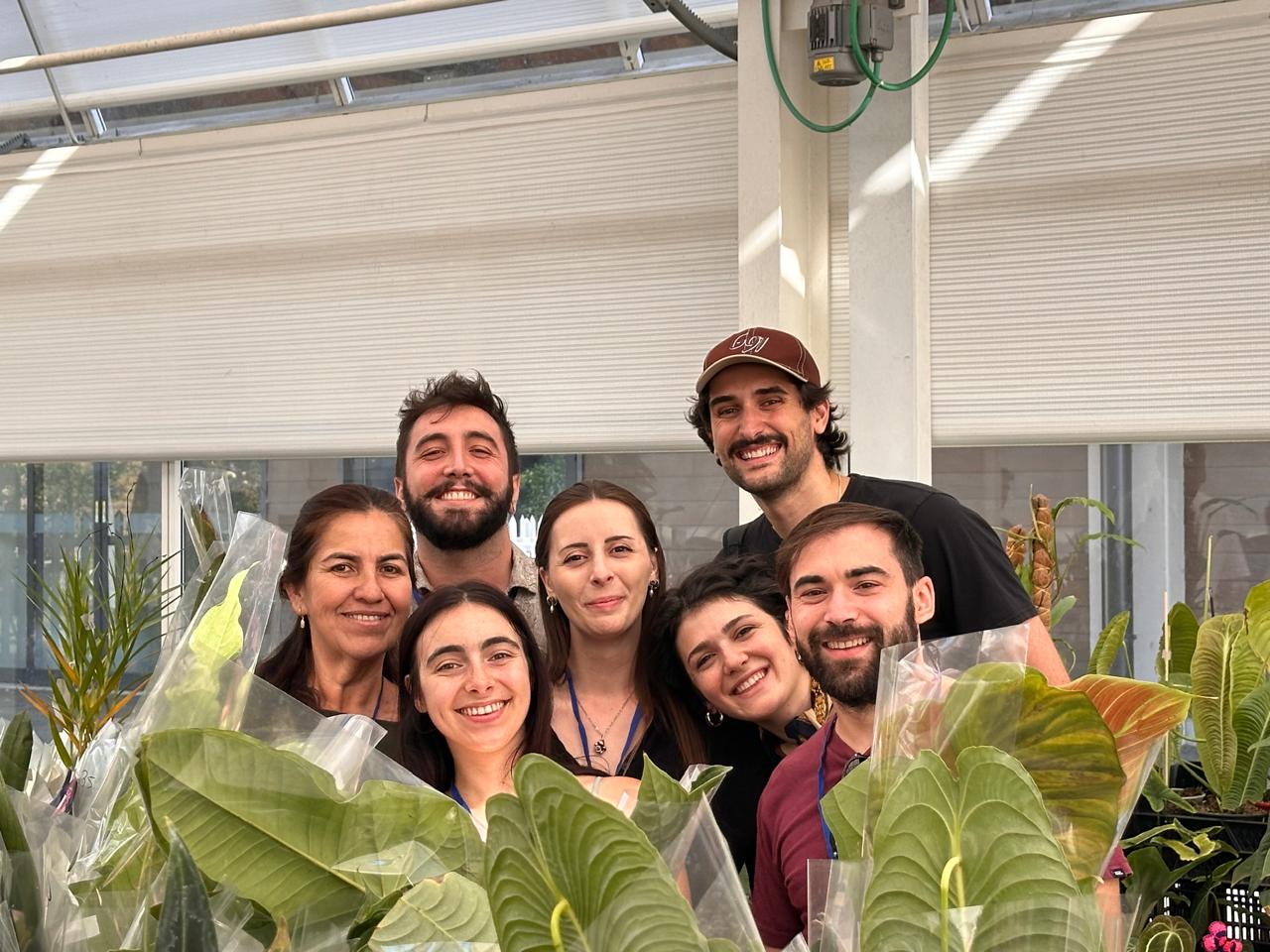
Festa del Cactus — Bologna
XX edition · Sept 19–21, 2025 · Thanks to everyone who joined us! 🌿
Pick-up completedNeed help choosing the perfect plant?
We offer free advice. Contact us via the channel you prefer: email, WhatsApp, or social media.